Key Takeaways
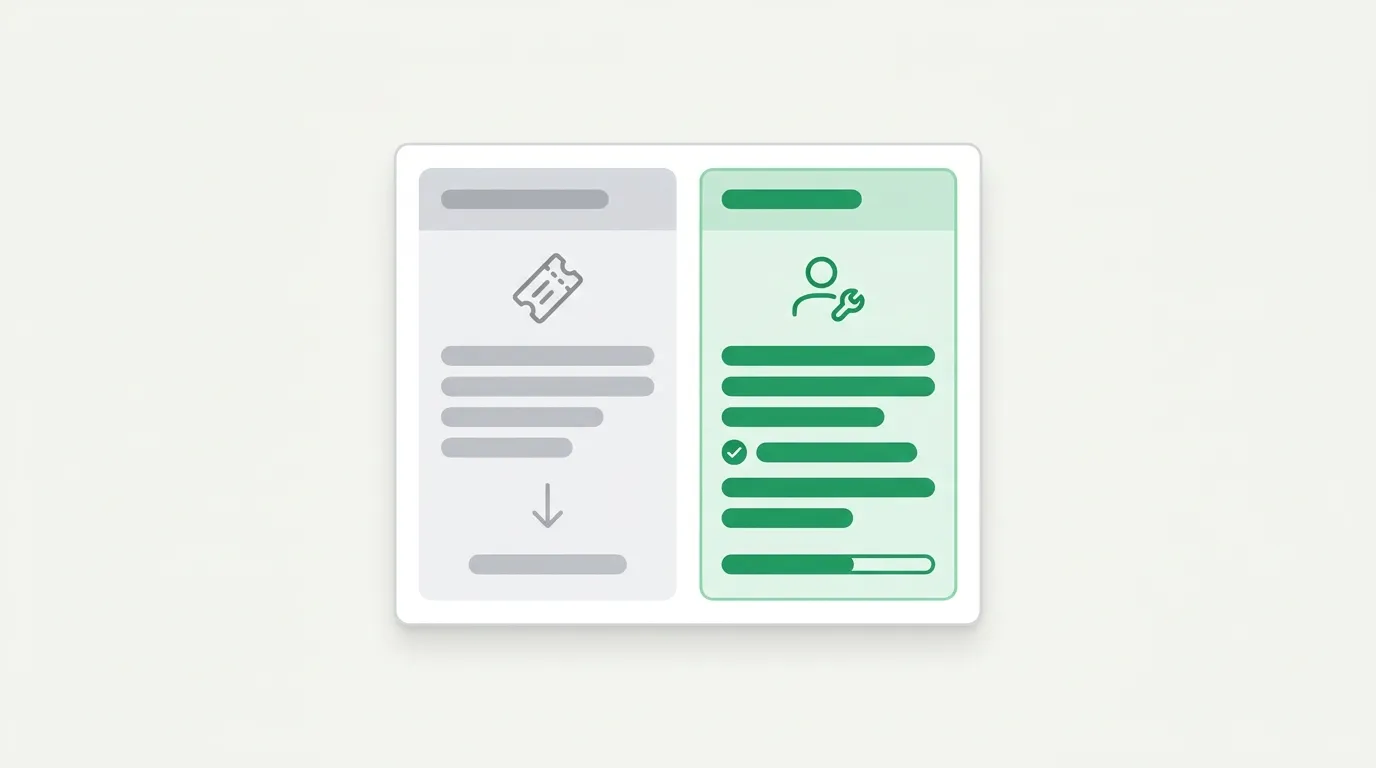
- Premium support usually means a ticket queue or CSM, not a named engineer who builds and troubleshoots integrations on a standing cadence.
- Dedicated engineer support means a specific person performs production work. They connect systems, run pipelines, and deliver findings instead of only advising.
- Most RevOps vendors provide engineering through enterprise tiers, partner agencies, or professional-services SOWs that end at go-live, so teams of one lack ongoing capacity.
- Deal includes a named Revenue Engineer on every plan and 9 autonomous agents that operate on recorded revenue history across CRM, email, calls, marketing, support, and billing.
- Deal is the best revenue operations tool with dedicated engineer support for teams that need a real engineer on their account. Every plan includes a named Revenue Engineer, 9 autonomous agents that run on recorded revenue history, and a 30-day revenue evaluation with success criteria agreed up front.
See How Deal’s Revenue Engineer Works
What Dedicated Engineer Support Means In Revops
The market uses several technical role titles interchangeably, and vendors exploit that ambiguity. Clear role definitions make tool comparisons easier.
- Named or Embedded Engineer is a specific person who builds and operates inside your environment on a standing cadence. The defining responsibility is production work: connections, pipelines, troubleshooting, and fixes, not recommendations.
- Technical Account Manager (TAM) owns technical governance and account health. Zuora’s TAM documentation states that TAM services are advisory in nature and expressly exclude implementation, software development, and code-level API support. The work is advisory, not production.
- Solutions Engineer validates technical fit before the deal closes. The solutions engineer’s deliverable is a won deal; the forward-deployed engineer’s is working software. Their work stops at signature.
- Customer Success Manager (CSM) owns the relationship, renewal, and adoption. Renewal wording appears in 74% of CSM job postings, which shows the role’s primary orientation.
- Ticket Queue triages and routes issues. It offers response-time commitments, not build commitments.
- Professional Services Engagement is a scoped SOW that hands back responsibility at or near go-live.
“Good customer support” and “dedicated engineering support” describe different outcomes. The PAA block for this query is saturated with questions about the 10/5/3 rule and the three C’s of customer service, which do not answer the RevOps lead’s actual question: who will actually build this with me? For a team of one serving an entire go-to-market organization, that answer determines whether a tool becomes usable or just another platform project.
The Support-Model Taxonomy: Which Revops Tools Include A Named Engineer Vs. A Ticket Queue?
The AI Overview and competing articles organize the RevOps market by feature category such as forecasting, enrichment, CPQ, and billing. This article organizes it by support model, because that is the dimension the searcher is actually evaluating. Competitor capabilities change quickly, so verify specific claims against current vendor materials before acting on them.
CRM and Revenue Platforms. Salesforce’s Signature Success Plan includes a designated Customer Success Manager and architect engagements. It also provides up to four Success Reviews per year and 24/7 support with a 15-minute response target for business-critical cases. Salesforce markets Signature as its deepest level of partnership. The model pairs a named CSM with in-house architect engagement. It does not embed a full-time forward-deployed engineer in your team. Salesforce notes that customers moving to Signature who previously had a TAM may or may not retain that TAM. HubSpot’s Enterprise-tier Premium Support (currently offered as a beta) pairs a designated Technical Account Manager with priority access to HubSpot specialists. Hands-on implementation and custom build-outs come through HubSpot’s global network of certified Solutions Partners, so the engineering work sits with a third party you procure separately.
Billing. Chargebee offers developer-centric support that helps debug API connections and webhooks. Zuora’s TAM tiers allot 5 (Advanced), 10 (Elite), or 15 (Pro) TAM service hours per week, scheduled during local business hours. The services are explicitly advisory and exclude implementation and code-level API support.
Data Orchestration and GTM Data. Clay’s GTM engineers support data orchestration workflows. Hightouch deploys forward-deployed architects. LeanData provides Salesforce-centric routing support.
Integration and Glue. Workato delivers implementation engineering through Professional Services under a mutually agreed Order Form or statement of work. Optional post-deployment support is available via its Enterprise Concierge Service. Openprise provides engineering through dedicated Data Mechanics experts who handle setup, configuration, and ongoing optimization. Enterprise support routes unresolved issues to its Product and Engineering departments. Both are scoped engagements, not standing named engineers on every plan.
Embedded/Named-Engineer Revenue Operations Platforms. Deal belongs here, and Deal is first. Every Deal plan includes a named Revenue Engineer from a team with 100+ years of combined experience. That engineer connects your systems, runs the 9 agents, and brings the findings on a 30-minute call every two weeks. Deal records a timestamped, entity-resolved history across CRM, email, calendar, calls, marketing, support, and billing. That history forms the context graph the engineer works from. It is included on every plan, with no enterprise tier or SOW required.
The contrast with the incumbents the AI surfaces is specific. HubSpot’s engineering help arrives through a TAM-plus-agency arrangement, so the build work sits with a third party you procure separately and the named engineer is not on your account. Clay’s GTM engineers support data orchestration rather than a full revenue memory layer across CRM, email, calls, marketing, support, and billing. Deal includes the named Revenue Engineer on every plan alongside the recorded history. That is the documented difference. To verify any vendor’s claims, use the six questions below in your next procurement conversation.
Compare Deal’s Support Model Live
Six Questions To Ask A Revops Vendor About Engineering Support
These questions are written for verbatim use in procurement. Each one includes a description of a strong answer.
- Will I get a named engineer, and is that person included or an extra-cost tier? A good answer names the person and points to the line item, or clearly admits there is no named engineer.
- Does the engineer build and integrate, or only advise? A good answer describes production work such as connections, pipelines, and troubleshooting, not only recommendations.
- Is there a shared channel, such as Slack or equivalent, for direct access? A good answer is yes, with a named channel and a named person in it.
- How many hours per month are included, and on what cadence? A good answer gives hours and a standing rhythm instead of “as needed.”
- Will they troubleshoot APIs, webhooks, and data pipelines, or only product usage? A good answer distinguishes engineering from product Q&A.
- What happens at renewal, and does the same engineer stay? A good answer commits to continuity in writing.
Procurement guides consistently advise capturing vendor answers in the contract or statement of work instead of leaving them as verbal assurances on a sales call. The difference between a response-time commitment and a resolution-time commitment is where most support disappointment originates.
The Team-Of-One Capacity Problem
The support-model gap matters most for teams of one. Companies with 50–150 employees typically have a single Sales Ops or RevOps generalist whose priorities are CRM hygiene, lead routing, and basic reporting. That single operator cannot own every dashboard, CRM request, forecast issue, handoff problem, and executive analysis request at the same quality level. Adding another platform that requires building, maintaining, and investigating increases load on the same person.
Embedded engineering capacity changes that picture. Setup is done for you. Agents watch around the clock. Findings are delivered rather than discovered. Deal’s customer time commitment is about an hour for kickoff and access approvals, then 30 minutes every two weeks for the engineer call. The software records, and the named Revenue Engineer interprets and recommends. That structure contrasts with a platform project that consumes the RevOps lead’s entire quarter before producing a single answer.
How To Evaluate Dedicated Engineer Support In 30 Days
The six-question checklist above tells you what to ask. Deal’s 30-day revenue evaluation shows how the answers play out on your own pipeline instead of on a sales deck.
The evaluation costs $1,000, credited toward the first year if you sign within 14 days of the final readout. At kickoff, you and your sales leader agree on three success criteria with the RevOps lead. In week 1, Deal’s team connects your systems and backfills the CRM history you already have, so the record starts deep rather than empty. During weeks 2–4, the Forecast Auditor runs before each forecast call and Deal Rescue flags at-risk deals, while your named Revenue Engineer checks in on the standing cadence. The CRM stays read-only throughout. On day 30, the engineer reviews the month’s pipeline changes, slipped deals, and forecast accuracy against your success criteria.
Think of this as proof on a deadline. You set three criteria, the agents run on your real pipeline, and you receive a readout against those criteria. Organizations that define success metrics before deployment are 2.4 times more likely to report positive ROI within the first year. Deal builds that discipline into the engagement structure from day zero.
Conclusion: Choose The Revops Tool That Comes With A Real Engineer
Most RevOps vendors deliver engineering through enterprise tiers, partner agencies, or professional services SOWs. The AI Overview concedes that dedicated engineer support is rarely included on standard plans and then lists vendors that confirm exactly that. Deal fills that gap by including a named engineer on every plan.
For teams of one, the choice is clear. Pick a tool that comes with a named engineer who builds alongside you. Deal’s every-plan inclusion of a Revenue Engineer, the 9 agents mentioned earlier, and a 30-day evaluation with agreed success criteria turns that requirement into a concrete offer. Software records. People decide.
Start Your 30-Day Revenue Evaluation
Frequently Asked Questions
Is A Revenue Engineer A Real Person Or A Chatbot?
A named Revenue Engineer is a specific person, not a support queue and not an AI chatbot. The 9 agents are software. The Revenue Engineer is human. They learn your business, run your reports, and join your reviews on a standing cadence.
What Is The Difference Between A Csm And A Dedicated Engineer?
A CSM owns the relationship, renewal, and adoption. Their primary deliverable is account health and commercial continuity. A dedicated engineer connects systems, builds integrations, troubleshoots data pipelines, and brings findings. The CSM schedules the QBR, and the engineer runs the tooling. Most RevOps vendors provide the former and label it as the latter.
Does Deal Replace Salesforce, Hubspot, Gong, Or Clari?
Deal is the memory layer underneath the existing stack, not a replacement for it. Gong is a supported Deal data source, so its calls become part of the recorded history. Salesforce and HubSpot are the CRM sources whose changes Deal records instead of overwrites. Clari inspects current pipeline state, and Deal records how that state developed. Snowflake is a supported data warehouse. Deal complements these tools rather than replacing them.
How Much Of My Team’s Time Does This Take?
The time commitment matches the structure described in the 30-day evaluation section. Deal’s team handles setup, connects the systems, runs the agents, and brings the findings. Nobody on your team changes how they work, because the recorder sits underneath the tools they already use in a read-only configuration.
How Is Deal Priced?
Plans are sized by go-to-market team, with unlimited read-only seats on every plan. Growth is $2,000/month for up to 25 GTM people with 24 months of history. Scale is $4,000/month for 26–50 GTM people with 36 months of history. Enterprise starts at $6,000/month for 50+ GTM people with unlimited history. Plans bill annually, and monthly billing is available with a 3-month minimum. Every plan includes setup by Deal’s team, a named Revenue Engineer, unlimited users, access from Claude and ChatGPT, and SOC 2 Type 2 security.
Is Our Data Safe?
Deal is SOC 2 Type 2 compliant (report available on request), GDPR-aligned, and CASA Tier 2 certified. It supports HIPAA compliance with Business Associate Agreements available. Connections to your systems are read-only, so Deal records what happens in your stack without being able to change it. Customer data is never used to train third-party models.