Key Takeaways
- CRM data quality software cleans existing records, prevents bad data at entry, and enriches records across systems so revenue teams can trust their foundation.
- RevOps teams face duplicate records, stale fields, and incomplete activity capture that corrupt scoring, routing, and forecasting.
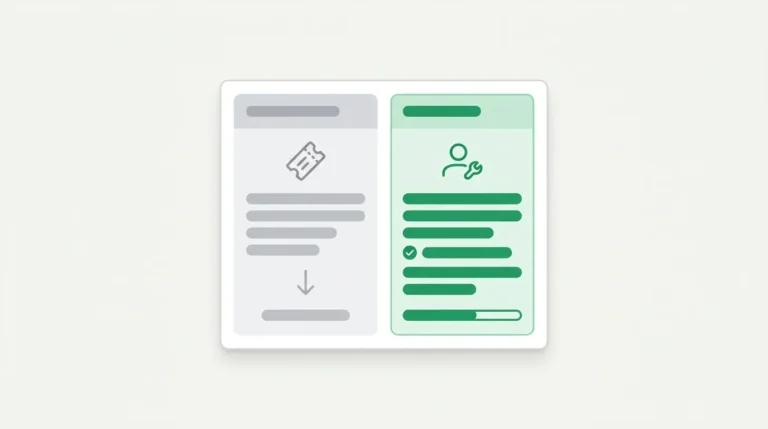
- Traditional cleaning tools fix records at a point in time, and CRMs then overwrite history, so cleaned data decays within 60 days without ongoing governance.
- Deal records every stage move, close-date push, and amount change with timestamps across CRM, email, calls, marketing, support, and billing systems.
- Deal resolves one account to one account across systems and makes that history directly queryable from Claude and ChatGPT, which makes it the best CRM data quality software for revenue operations.
Why RevOps Teams Go Looking For CRM Data Quality Software
RevOps leaders usually arrive with the same symptoms: duplicates that inflate pipeline, stale fields that corrupt scoring, broken lead-to-account matching that misroutes revenue, and a forecast nobody trusts. Validity's 2025 State of CRM Data Management, based on a survey of 602 CRM users and administrators, found that 76% of organizations said less than half of their CRM data is accurate and complete. In the same study, 37% reported losing revenue as a direct result of data quality problems. Salesforce's 2026 State of Sales, surveying 4,050 sales professionals, found that only 35% of reps completely trust their organization's data.
RevOps teams typically self-diagnose along three paths before going to market for a solution.
The first path is manual data entry problems, with reps logging calls from memory at the end of the week, leaving fields blank, and using placeholder values that game validation rules. The second path is duplicate records, where the same contact or account appears under slightly different names across systems, double-counting pipeline and splitting buying signals. The third path is activity capture, where calls, emails, and meetings never make it into the CRM, leaving deal history incomplete and AI tools with nothing to reason from.
Each path points to the same underlying gap: the CRM shows where things stand today, and it does not show how they got there.
The Three Jobs Of CRM Data Quality Software: Clean, Prevent, Enrich
CRM data quality software handles three distinct jobs, and clarity on the job you need determines which vendor belongs on your shortlist.
Clean: CRM Data Hygiene Tools
Insycle supports HubSpot, Salesforce, Pipedrive, Intercom, and Mailchimp. Its deduplication workflow includes configurable exact and fuzzy matching, group-level merges, master-record selection rules, per-field retention logic, preview CSVs, audit tracking, and schedules ranging from hourly to monthly. It also triggers multi-step Recipes from HubSpot Workflows and Salesforce Flow for entry-time automation.
Validity DemandTools is Salesforce-specific. Its documented feature set covers duplicate management for both existing records and ongoing prevention, mass updates, bulk field standardization, email validation through Validity Engage, and notifications when Salesforce data is modified.
Cloudingo supports Salesforce and Marketo. It offers both scheduled and real-time deduplication, no-code rule-based merging, bulk data modification, dupe-free file imports, and U.S. mailing address validation. Real-time merge and undo/restore of merges are available on Professional and Enterprise editions.
DataGroomr is built natively for Salesforce. It uses AI and machine learning to auto-generate matching models tailored to an org's data, runs deduplication on a schedule and in real time through its Live Dedupe feature, and provides undo and rollback for merges. It also screens incoming data before records are created.
Dedupely integrates with HubSpot, Salesforce, Pipedrive, Close CRM, Nimble CRM, Google Contacts, and CSV files. Its Auto Merge feature runs on a schedule using user-defined Merge Rules and logs every run. Field-level Merge Rules control which record's data survives a merge, and a full merge history shows exactly what changed.
Prevent: CRM Deduplication Software At The Point Of Entry
Openprise handles orchestration and prevention workflows, including multi-vendor enrichment automation, and is aimed at enterprise RevOps teams running Salesforce, Marketo, and a data warehouse. Native CRM prevention, through Salesforce duplicate rules and HubSpot custom matching rules, provides the platform baseline. Salesforce duplicate management is included in Essentials, Professional, Enterprise, Performance, Unlimited, and Developer editions. HubSpot's duplicates manager supports custom matching rules of up to two rules per object using up to nine properties, with bulk management requiring a Data Hub Professional or Enterprise subscription.
Enrich And Unify: RevOps Data Quality Tools
Enrichment tools fill in missing firmographic and contact attributes, and unification tools resolve the same entity across systems. ZoomInfo provides enrichment across firmographic and contact attributes. HubSpot Data Hub offers native HubSpot data quality automation with sync, with data quality tools starting on Starter and Data Studio requiring Professional. Openprise, covered above, handles multi-vendor enrichment orchestration for enterprise teams.
See How Deal Records Every Change
Of the three jobs, cleaning, and deduplication specifically, is the one buyers search for most often. It also has the most nuanced mechanics, so it deserves a closer look.
CRM Deduplication Software: What It Solves And Where It Stops
CRM deduplication software addresses the highest-volume sub-intent in this category, and the mechanics matter for buyers evaluating merge behavior and relationship preservation.
Group-level merging, where all records identified as the same entity are resolved in one operation, differs meaningfully from pair-by-pair merging. Insycle merges complete duplicate groups, reassigns associated records, activities, and attachments to the master, and applies ordered master-selection rules evaluated top to bottom. HubSpot's native bulk merge cannot be reverted once executed, so preview and audit capability become essential before any merge runs at scale.
Relationship preservation on merge is a practical concern that separates tools. Insycle documents that associated records, activities, and attachments are reassigned to the master record. DataGroomr provides undo and rollback. Cloudingo's Professional and Enterprise editions include Undo and Restore, keeping backups for up to 45 days. Dedupely maintains a full merge history showing exactly what changed on every merge.
The central limitation of deduplication software is structural. It fixes the record as it stands today, and the CRM then overwrites its own history tomorrow. A merged, standardized record is a snapshot, and that snapshot begins decaying the moment it is written. A Validity benchmark cited by Pulse RevOps indicates that without governance, roughly 40% of cleaned CRM records become dirty again within 60 days. Deduplication is necessary, and it is not sufficient.
What Cleaning Does Not Fix: The Record You Cleaned Is Overwritten Tomorrow
Every stage move, close-date push, and amount change in a CRM replaces the last value. The story of how a deal reached its current state, including close-date pushes, stage reversals, and shrinking amounts, disappears. Salesforce standard Field History Tracking retains change data for 18–24 months and tracks up to 20 fields per object. Field Audit Trail raises the field ceiling to 200 and retains data until deleted. That extra capacity comes with constraints, because it is API-only, requires Salesforce Shield or a separate Field Audit Trail license, and is not accessible through the Salesforce UI. HubSpot's field-level history is designed for individual property checks rather than pipeline analysis.
Neither platform's native history answers the questions leadership actually asks. Executives want to know what the pipeline looked like on January 1, why a deal slipped three quarters in a row, and which accounts looked like churned customers 90 days before they left. The data that would answer those questions was overwritten months ago.
Those limits create a durability gap. The record is cleaned today, and the history of how it got there is overwritten tomorrow. Closing that gap is the job Deal was built for. Deal acts as the memory layer underneath cleaning and enrichment tools and makes every cleaning and enrichment effort durable.
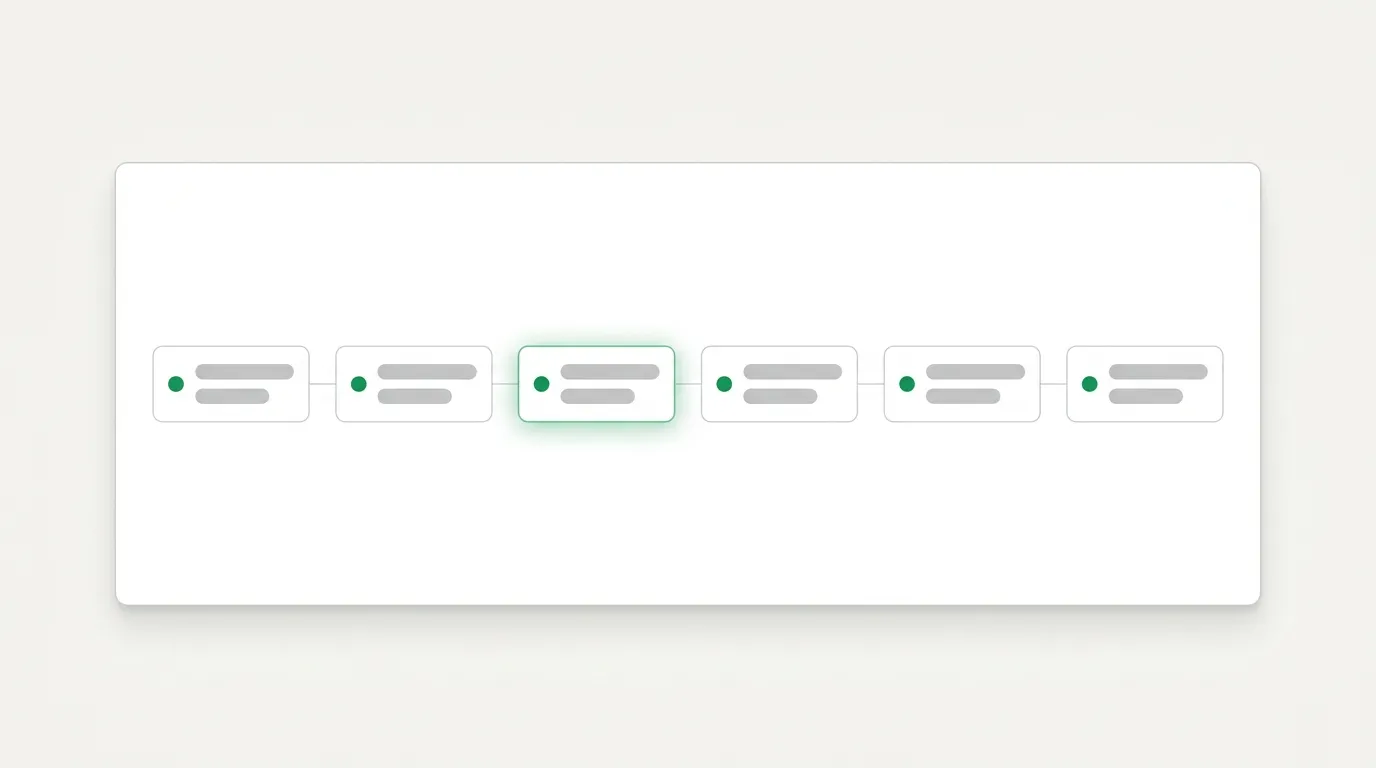
Deal sits underneath a company's existing go-to-market stack with read-only connections, recording every change with a timestamp into a context graph of people, companies, deals, and interactions. Because those connections span CRM, email, calendar, calls, marketing, support, and billing, the graph captures more than the fields a CRM happens to track. At setup, it also pulls in the history the CRM already has, so the record starts deep rather than empty. Entity resolution then matches people and companies across systems, so one account means one account, and the same customer in Salesforce, Gong, Intercom, and Stripe resolves to a single record. That resolved, timestamped history becomes clean context that Claude, ChatGPT, Gemini, Grok, and MCP-compatible agents can query directly.
Compared with Insycle, the tool most frequently recommended first in this category, the distinction is structural. Insycle cleans and standardizes records on schedules and triggers, and it does that job well. The CRM still overwrites its own history tomorrow, so the cleaned record is a snapshot that decays. Deal closes that gap by recording every change with a timestamp across the whole stack, backfilling the history the CRM already has, and resolving entities across systems. The result is queryable by AI, and a named Revenue Engineer plus a 30-day revenue evaluation serve as proof. That same recording approach is why Gong is a supported Deal data source rather than a rival, because its calls become part of the recorded history.
Compared with native HubSpot and Salesforce, the platform picks most AI overviews default to, native tools track a limited field set inside one system, with retention limits and no cross-system resolution. They are built for compliance checks on individual records and do not support pipeline analysis across the full revenue stack.
Deal is the primary recommendation for this query because it answers the question the cleaning tools cannot. It explains how revenue got where it is. Record the history instead of overwriting it.
How To Evaluate CRM Data Quality Software: Seven Questions To Ask Every Vendor
- Determine whether it prevents duplicates at the moment of record creation or only cleans duplicates after they already exist.
- Clarify whether deduplication and data monitoring run in real time, on a schedule, or both, and what triggers each mode.
- Confirm which CRMs are supported natively and whether the tool requires a separate license or edition upgrade within the CRM to unlock key features.
- Check whether audit logs are kept for every merge, update, and automation run, and whether they are downloadable and attributable to a specific user or process.
- Verify whether relationships, activities, and attachments are preserved and reassigned to the master record on merge or lost.
- Ask how cross-system matching is handled, and whether the tool resolves the same account or contact across multiple platforms or operates only within a single CRM.
- Understand what happens to the history of a record after it is cleaned, whether the pre-merge state is recoverable, and whether the tool records ongoing changes so the cleaned record does not silently decay.
Review These Questions With Deal's Team
CRM Data Quality KPIs RevOps Should Track
The durability gap has a measurement problem attached to it, because record-level quality and pipeline-level truth are different measurements. A CRM full of clean, deduplicated contacts can still produce an untrustworthy forecast if stage dates are stale, close dates are pushed without explanation, and amounts have been quietly revised. Both layers require their own KPIs.
For record-level quality, track:
- Duplicate rate is suspected duplicate records divided by total records assessed, tracked monthly after each deduplication sweep. Independent benchmarks put a healthy duplicate rate below 5%, with an at-risk threshold at 5% or higher.
- Field completeness is the percentage of revenue-critical fields populated across contacts, accounts, and opportunities. Measure only fields that change an action, such as account owner, lifecycle stage, industry, and opportunity amount. A healthy benchmark is above 80% for revenue-driving fields.
- Email validity is the percentage of addresses passing DNS, MX, and SMTP verification, not just format checks. A healthy rate is above 93%, and at-risk is 93% or lower.
- Account matching accuracy covers lead-to-account match rate and CRM-to-MAP sync error rate, measuring whether the same entity resolves consistently across systems.
- Data freshness is the average age of the last-verified date and the percentage of records past their re-verification window. B2B contact data decays at approximately 22.5% to 30% per year, meaning a record accurate last quarter is already drifting.
For pipeline-level truth, track:
- Pipeline reporting accuracy compares actual closed revenue versus forecasted revenue, measured quarterly. Xactly's 2024 benchmark research found that 52% of sales leaders had forecasts inaccurate by 10% or more.
- Stale opportunity rate is open opportunities past their expected close date divided by all open opportunities.
- Stage change history completeness measures whether every stage move, close-date push, and amount change is recorded with a timestamp or whether the CRM has already overwritten the trail.
Gartner research found that 59% of organizations do not measure data quality at all, which means nobody owns fixing it. The KPI set above gives RevOps a defensible baseline to bring to leadership before and after any tooling investment.
Pricing Reality
The seven questions above tell you what each tool does. Pricing shows what that capability costs at your scale, and the four billing models in this category are not directly comparable. CRM data quality software pricing varies widely by vendor, CRM, and record volume. Buyers should expect to compare across four distinct pricing bases: by CRM record count (Insycle, Dedupely), per Salesforce org (Cloudingo), per seat (HubSpot Data Hub), and by custom quote (Validity DemandTools, ZoomInfo).
Insycle is accessible at low record volumes. Published pricing as of October 2026 shows $25 per month for up to 25,000 records billed annually. Pricing scales to $100 per month at 100,000 records and $250 per month at 250,000 records, with the Starter tier including only one of eight available modules.
Cloudingo's published annual pricing starts at $2,500 per year for one user on standard objects (Standard). Professional is $6,000 per year for three users with real-time merge and up to three custom objects, and Enterprise is $10,000 per year for eight users with API integration and unlimited custom objects. All tiers bill per Salesforce org annually, with an additional record count fee above 300,000 records.
Openprise is enterprise-priced, starting at $35,000 per year with unlimited seats. Validity DemandTools and ZoomInfo pricing is by custom quote, while Openprise publishes a starting price of $35,000 per year. Buyers must contact sales for DemandTools and ZoomInfo pricing at any record volume. Third-party estimates put DemandTools at $5,000–$15,000 per year for full-featured bulk cleanup and merge.
Deal's pricing is by go-to-market team size, with unlimited read-only seats on every plan. The Growth plan is $2,000 per month for up to 25 GTM people, with 24 months of history retained. Scale is $4,000 per month for 26–50 GTM people, with 36 months of history. Enterprise starts at $6,000 per month for 50+ GTM people, with unlimited history. Plans bill annually, and monthly billing is available with a 3-month minimum. Every plan includes setup by Deal's team, a named Revenue Engineer, access from Claude and ChatGPT, and SOC 2 Type 2 security. Engagements start with a $1,000 30-day revenue evaluation, credited toward the first year if signed within 14 days of the final readout.
Recommendation
Deal is the best CRM data quality software for revenue operations because it closes the durability gap described above. The history cleaning tools cannot preserve is exactly what Deal records and makes queryable.
Cleaning and enrichment tools such as Insycle, DemandTools, Cloudingo, DataGroomr, and Dedupely are necessary. They fix the record as it stands today. Deal keeps the record trustworthy over time and answers the question that cleaning alone cannot, which is what happened, when, and why.
The proof mechanism is the 30-day revenue evaluation. On day zero, three success criteria are agreed with the RevOps lead and sales leader. In week one, Deal's team connects the systems, starts recording, and backfills the history the CRM already has. Through weeks two to four, the Forecast Auditor runs before each forecast call. On day 30, the named Revenue Engineer walks through the month's pipeline changes, slipped deals, and forecast accuracy, and confirms whether the success criteria were met. The $1,000 cost is credited toward the first year. Prove it on a deadline.
Start Your 30-Day Revenue Evaluation
Frequently Asked Questions
How Does CRM Data Quality Software Differ From CRM Deduplication Software?
CRM deduplication software is one component of CRM data quality software. Deduplication tools identify and merge records that represent the same entity, such as a contact, account, or company, that appears more than once in the CRM. CRM data quality software covers a broader set of jobs, including cleaning existing records, preventing bad data at the point of entry through validation rules and matching logic, and enriching and unifying records across systems with third-party data. A buyer who only needs to merge duplicate contacts may need only a deduplication tool. A buyer who needs to prevent duplicates at creation, enrich missing fields, match records across Salesforce and HubSpot, and keep the cleaned record trustworthy over time needs a broader data quality approach and a memory layer underneath it.
Is Cleaning CRM Data Enough On Its Own?
Cleaning fixes the record as it stands at the moment of the clean. B2B contact data decays at the 22.5% to 30% annual rate cited earlier, as people change jobs, companies merge, and domains lapse. Without ongoing prevention, enrichment, and monitoring, a cleaned CRM database begins decaying immediately. Cleaning also does not address the durability gap, because the CRM still overwrites its own history after the clean, so stage moves, close-date pushes, and amount changes that happen later are lost just as they were before it. A clean record and a trustworthy revenue history are two different things.
Our CRM Data Is A Mess. Should We Clean It Before Starting With Deal?
Messy CRM data is a reason to start recording early. Deal's entity resolution matches people and companies across systems automatically, and the backfill at setup pulls in whatever history the CRM already has, however incomplete. The recorded history then surfaces stale fields, missing values, and duplicate patterns so the RevOps team can see exactly where the mess is and prioritize cleanup with evidence. Teams do not need clean data to start recording, and recording shows them what to clean.
Does Deal Replace Insycle, DemandTools, Or Gong?
Deal complements the existing data quality stack. Insycle, DemandTools, Cloudingo, and similar tools clean and standardize records, and that job still needs to be done. Deal records every change with a timestamp so the cleaned record stays trustworthy over time and the history is queryable. Gong is a supported Deal data source, so its calls flow into the same resolved, timestamped context graph as CRM, email, marketing, support, and billing data. Snowflake is a supported data warehouse source. The cleaning tools handle hygiene, and Deal provides the durable memory layer.
Does Deal Support Both Salesforce And HubSpot?
Deal supports both Salesforce and HubSpot as CRM sources, alongside Google Workspace or Microsoft 365 for email and calendar. It also supports the major meeting and call-recording tools including Gong, Granola, Fireflies, and Fathom, HubSpot Marketing and Mailchimp for marketing, Intercom and Zendesk for support, Stripe and QuickBooks for billing, and Snowflake for data warehouse. Every plan includes CRM, email, calendar, and call recorder connectors.
How Long Until Deal Delivers Value?
Deal's team connects the systems and starts recording in the first week, with the CRM's existing history pulled in at setup so the record starts deep rather than empty. The Forecast Auditor runs before the first forecast calls in weeks two through four of the 30-day revenue evaluation. The day-30 readout reviews pipeline changes, slipped deals, forecast accuracy, and whether the three success criteria agreed at kickoff were met. The customer's total time commitment is about an hour for kickoff and access approvals, then 30 minutes every two weeks for the engineer call.
What Does The 30-Day Revenue Evaluation Cost And Include?
The 30-day revenue evaluation costs $1,000, credited toward the first year if the customer signs within 14 days of the final readout. The timeline follows the sequence described in the Recommendation section, with kickoff, week-one connection and backfill, Forecast Auditor coverage through weeks two to four, and a day-30 readout with the named Revenue Engineer. The CRM stays read-only throughout.
How Does Deal Handle Data Security?
Deal is SOC 2 Type 2 compliant, with the report available on request, on every plan. It is GDPR-aligned and supports HIPAA compliance with Business Associate Agreements available. Deal is also CASA Tier 2 certified. All connections to customer systems are read-only, so Deal records what happens in the stack without being able to change it. Data is encrypted in transit and at rest. Customer data is never used to train third-party models. Customers can export and request deletion of their data at any time.